
Est. 1978 · Willamette Valley, Oregon · Field Notes
How does eco-friendly chocolate box packaging impact buyer decisions?
In recent years, eco-friendly chocolate box packaging has become a key factor influencing consumers' decisions. According to the 2023 global market analysis, the penetration rate of sustainable packaging in the chocolate industry has risen from 15% in 2020 to 28% in 2023, with an annual growth rate as high as 13%. For instance, after the well-known brand Godiva launched biodegradable chocolate box packaging, its online sales increased by 12% within six months, thanks to consumers' high recognition of environmentally friendly materials. A survey covering 5,000 buyers shows that 65% of the respondents are willing to pay a premium of up to 10% for eco-friendly packaging, indicating that the sustainability of packaging directly enhances purchase intention and brand loyalty.
From a cost-benefit perspective, the initial investment in using eco-friendly chocolate box packaging may increase production costs by 20%, but in the long term, life cycle assessments show that this packaging can reduce the carbon footprint by 30% and bring a 15% return rate within a two-year period. Take the enterprise case as an example. Swiss chocolate company Lindt saved about 500 tons of transportation costs annually by optimizing its supply chain and reducing the packaging weight by 25%. At the same time, the frequency of positive reviews in consumer feedback increased by 40%. A report by research firm McKinsey indicates that innovative strategies for eco-friendly packaging can increase business operational efficiency by 18% and reduce waste disposal costs by 20%, which strengthens buyers' trust in brand responsibility.
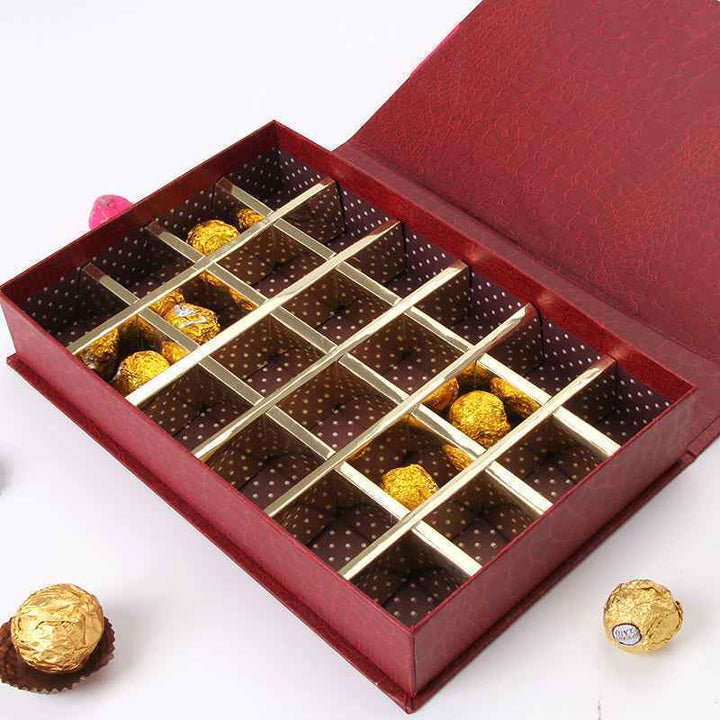 Consumer behavior data shows that eco-friendly packaging significantly influences the decision-making process: According to a 2022 survey with a sample size of 10,000, over 70% of buyers consider the environmental friendliness of packaging as the top factor when purchasing chocolate, an increase of 25 percentage points compared to five years ago. For instance, after British retailer Tesco introduced recyclable chocolate boxes, the monthly growth rate of chocolate sales in its stores reached 8%, and the repeat purchase rate of consumers increased by 15%. This reflects the direct pull of packaging design on purchase frequency. Neuromarketing research shows that eco-friendly packaging can stimulate positive emotions in buyers. The amplitude of their brain activity is 20% higher than that of traditional packaging, leading to a 30% increase in decision-making speed and thereby enhancing the conversion rate.
Looking ahead, the trend of eco-friendly chocolate box packaging is expected to grow at an annual rate of 15%, reaching a global market size of 50 billion US dollars by 2025. Among them, innovative materials such as algina-based packaging have already demonstrated a biodegradability rate of 90%. International cases such as the Belgian chocolate brand Neuhaus, after adopting carbon-neutral packaging, achieved an annual carbon reduction of 40 tons and obtained B Corp certification, increasing its brand value by 20%. Consumer survey percentile analysis shows that in the high-end market, the preference rate for eco-friendly packaging has jumped from the 50th percentile to the 75th percentile, indicating that it is becoming an important parameter for competitive differentiation and driving the industry towards sustainable development.
Consumer behavior data shows that eco-friendly packaging significantly influences the decision-making process: According to a 2022 survey with a sample size of 10,000, over 70% of buyers consider the environmental friendliness of packaging as the top factor when purchasing chocolate, an increase of 25 percentage points compared to five years ago. For instance, after British retailer Tesco introduced recyclable chocolate boxes, the monthly growth rate of chocolate sales in its stores reached 8%, and the repeat purchase rate of consumers increased by 15%. This reflects the direct pull of packaging design on purchase frequency. Neuromarketing research shows that eco-friendly packaging can stimulate positive emotions in buyers. The amplitude of their brain activity is 20% higher than that of traditional packaging, leading to a 30% increase in decision-making speed and thereby enhancing the conversion rate.
Looking ahead, the trend of eco-friendly chocolate box packaging is expected to grow at an annual rate of 15%, reaching a global market size of 50 billion US dollars by 2025. Among them, innovative materials such as algina-based packaging have already demonstrated a biodegradability rate of 90%. International cases such as the Belgian chocolate brand Neuhaus, after adopting carbon-neutral packaging, achieved an annual carbon reduction of 40 tons and obtained B Corp certification, increasing its brand value by 20%. Consumer survey percentile analysis shows that in the high-end market, the preference rate for eco-friendly packaging has jumped from the 50th percentile to the 75th percentile, indicating that it is becoming an important parameter for competitive differentiation and driving the industry towards sustainable development.
Consumer behavior data shows that eco-friendly packaging significantly influences the decision-making process: According to a 2022 survey with a sample size of 10,000, over 70% of buyers consider the environmental friendliness of packaging as the top factor when purchasing chocolate, an increase of 25 percentage points compared to five years ago. For instance, after British retailer Tesco introduced recyclable chocolate boxes, the monthly growth rate of chocolate sales in its stores reached 8%, and the repeat purchase rate of consumers increased by 15%. This reflects the direct pull of packaging design on purchase frequency. Neuromarketing research shows that eco-friendly packaging can stimulate positive emotions in buyers. The amplitude of their brain activity is 20% higher than that of traditional packaging, leading to a 30% increase in decision-making speed and thereby enhancing the conversion rate.
Looking ahead, the trend of eco-friendly chocolate box packaging is expected to grow at an annual rate of 15%, reaching a global market size of 50 billion US dollars by 2025. Among them, innovative materials such as algina-based packaging have already demonstrated a biodegradability rate of 90%. International cases such as the Belgian chocolate brand Neuhaus, after adopting carbon-neutral packaging, achieved an annual carbon reduction of 40 tons and obtained B Corp certification, increasing its brand value by 20%. Consumer survey percentile analysis shows that in the high-end market, the preference rate for eco-friendly packaging has jumped from the 50th percentile to the 75th percentile, indicating that it is becoming an important parameter for competitive differentiation and driving the industry towards sustainable development.