
Est. 1978 · Willamette Valley, Oregon · Field Notes
What does an industrial floor scrubber buying guide cover for large facilities?
A professional industrial floor scrubber buying guide is not only a list of equipment, but also a systematic strategic blueprint for the complex needs of large facilities. It begins with an accurate mapping of its own operational scenarios: Is the area you need to clean a 100,000-square-meter logistics warehouse or a production workshop with chemical spills risks? Data shows that for facilities with an area of over 50,000 square meters, the use of ride-on floor scrubbers can increase efficiency by more than 300%. Their working widths range from 85 cm to 135 cm, and the theoretical cleaning efficiency can reach up to 7,000 square meters per hour. Usually, one device can replace 8 to 10 workers. For instance, a globally renowned automaker has deployed explosion-proof floor scrubbers in its 200,000-square-meter painting workshop, specifically designed to handle oil stains and chemicals. The equipment features a motor power of up to 3 kilowatts and has special certifications, which can reduce the cleaning cycle from the traditional 8 hours to 2.5 hours. Therefore, an excellent industrial floor scrubber buying guide will first lead you to complete a detailed "needs diagnosis" covering floor materials, pollution types, operation time Windows and compliance safety standards.
Delving into the core of the technology, a comprehensive industrial floor scrubber buying guide will unlock the key parameters that determine long-term performance. The battery system is the heart. For factories that require continuous operation in three shifts, the lithium-ion battery solution is the preferred choice. Its charging time can be shortened to 2 hours, and its cycle life exceeds 2,000 times. Compared with traditional batteries, it can save about 40% of energy and management costs throughout its entire life cycle. The precision of the cleaning system is related to the outcome and cost control. The brush pressure of high-end models can be adjusted steplessly to 50 kilograms, and the accuracy error of the clear water flow does not exceed ±5%. The sewage recovery rate needs to be as high as over 97%, which directly determines the ground drying time (which can be as fast as within 3 minutes) and water resource consumption (less than 0.5 liters per square meter). In addition, the navigation and passability of the equipment are of vital importance. Models with a minimum turning radius of less than 1200 millimeters can operate flexibly in narrow passages, while those with a ground clearance of over 120 millimeters can handle cables and gentle slopes. Referring to the case of Boeing's large assembly plant, they selected high-passability aircraft, which increased the effective cleaning coverage rate by 25% and reduced the rate of unexpected equipment downtime by 15%.
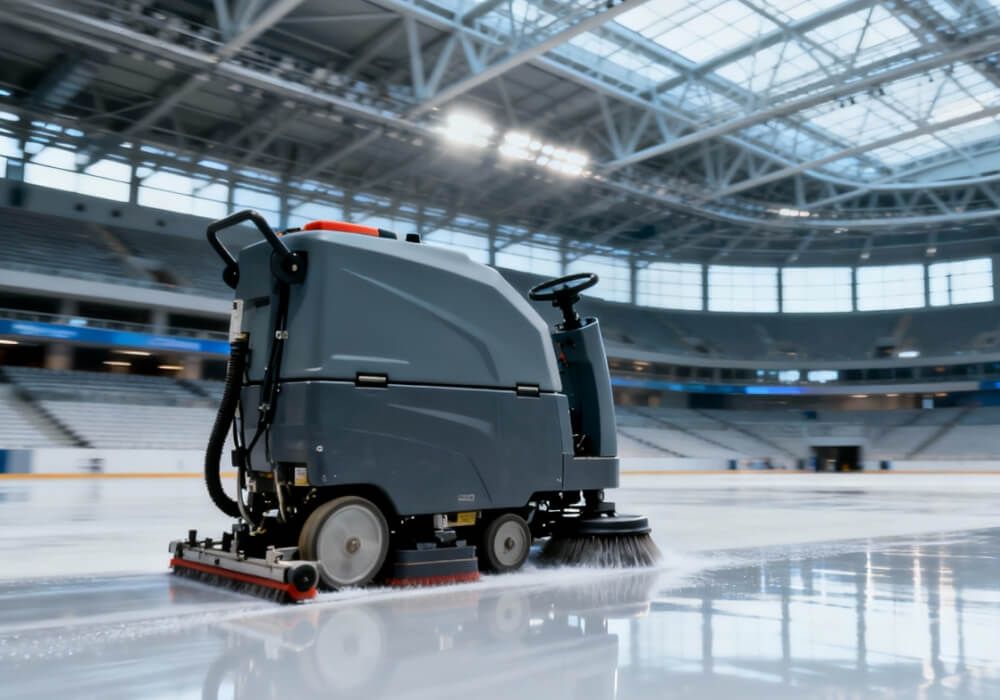 From a financial perspective, a responsible purchasing guide must lead you beyond the initial price to conduct a total cost of ownership analysis. The initial investment for a heavy-duty driving floor scrubber may range from $80,000 to $250,000, but the average proportion of maintenance, consumables and energy costs in the total cost of ownership over five years is as high as 60%. Professional analysis models calculate the return on investment: by enhancing cleaning efficiency by 60%, reducing detergent consumption by 65%, and saving 70% on labor costs, the payback period for many projects is within 12 to 18 months, and the long-term return on investment can reach 120% to 200%. For instance, after a large food processing plant implemented equipment standardization and preventive maintenance plans, it stabilized the annual maintenance cost of a single piece of equipment within 8% of the initial purchase price and reduced the rate of unexpected failures by 50%, which increased the predictability of the annual cleaning budget by 30%. The true value lies in transforming equipment from a "cost center" into an "efficiency asset".
Ultimately, a forward-looking industrial floor scrubber buying guide will lead you towards intelligent integration and future validation. Currently, over 35% of large-scale facility managers list Internet of Things (iot) connectivity as a core requirement for procurement. Intelligent devices can transmit work data in real time, such as operation area, energy consumption curves and component lifespan. Through cloud platform analysis, cleaning paths can be optimized, equipment utilization can be increased by 25%, and predictive maintenance can be achieved, reducing unexpected downtime by 15%. Take a certain global logistics center as an example. The networked floor scrubber fleet it deployed accurately predicted the battery replacement cycle with an error of no more than 7 days through data analysis, and increased the overall fleet operation efficiency by 30%. Therefore, the most outstanding procurement decision is not merely about choosing a machine, but also about selecting a scalable intelligent clean ecosystem to ensure that your investment today continues to drive positive growth in operational data over the next five years.
From a financial perspective, a responsible purchasing guide must lead you beyond the initial price to conduct a total cost of ownership analysis. The initial investment for a heavy-duty driving floor scrubber may range from $80,000 to $250,000, but the average proportion of maintenance, consumables and energy costs in the total cost of ownership over five years is as high as 60%. Professional analysis models calculate the return on investment: by enhancing cleaning efficiency by 60%, reducing detergent consumption by 65%, and saving 70% on labor costs, the payback period for many projects is within 12 to 18 months, and the long-term return on investment can reach 120% to 200%. For instance, after a large food processing plant implemented equipment standardization and preventive maintenance plans, it stabilized the annual maintenance cost of a single piece of equipment within 8% of the initial purchase price and reduced the rate of unexpected failures by 50%, which increased the predictability of the annual cleaning budget by 30%. The true value lies in transforming equipment from a "cost center" into an "efficiency asset".
Ultimately, a forward-looking industrial floor scrubber buying guide will lead you towards intelligent integration and future validation. Currently, over 35% of large-scale facility managers list Internet of Things (iot) connectivity as a core requirement for procurement. Intelligent devices can transmit work data in real time, such as operation area, energy consumption curves and component lifespan. Through cloud platform analysis, cleaning paths can be optimized, equipment utilization can be increased by 25%, and predictive maintenance can be achieved, reducing unexpected downtime by 15%. Take a certain global logistics center as an example. The networked floor scrubber fleet it deployed accurately predicted the battery replacement cycle with an error of no more than 7 days through data analysis, and increased the overall fleet operation efficiency by 30%. Therefore, the most outstanding procurement decision is not merely about choosing a machine, but also about selecting a scalable intelligent clean ecosystem to ensure that your investment today continues to drive positive growth in operational data over the next five years.
From a financial perspective, a responsible purchasing guide must lead you beyond the initial price to conduct a total cost of ownership analysis. The initial investment for a heavy-duty driving floor scrubber may range from $80,000 to $250,000, but the average proportion of maintenance, consumables and energy costs in the total cost of ownership over five years is as high as 60%. Professional analysis models calculate the return on investment: by enhancing cleaning efficiency by 60%, reducing detergent consumption by 65%, and saving 70% on labor costs, the payback period for many projects is within 12 to 18 months, and the long-term return on investment can reach 120% to 200%. For instance, after a large food processing plant implemented equipment standardization and preventive maintenance plans, it stabilized the annual maintenance cost of a single piece of equipment within 8% of the initial purchase price and reduced the rate of unexpected failures by 50%, which increased the predictability of the annual cleaning budget by 30%. The true value lies in transforming equipment from a "cost center" into an "efficiency asset".
Ultimately, a forward-looking industrial floor scrubber buying guide will lead you towards intelligent integration and future validation. Currently, over 35% of large-scale facility managers list Internet of Things (iot) connectivity as a core requirement for procurement. Intelligent devices can transmit work data in real time, such as operation area, energy consumption curves and component lifespan. Through cloud platform analysis, cleaning paths can be optimized, equipment utilization can be increased by 25%, and predictive maintenance can be achieved, reducing unexpected downtime by 15%. Take a certain global logistics center as an example. The networked floor scrubber fleet it deployed accurately predicted the battery replacement cycle with an error of no more than 7 days through data analysis, and increased the overall fleet operation efficiency by 30%. Therefore, the most outstanding procurement decision is not merely about choosing a machine, but also about selecting a scalable intelligent clean ecosystem to ensure that your investment today continues to drive positive growth in operational data over the next five years.