
Est. 1978 · Willamette Valley, Oregon · Field Notes
How does a dental intraoral scanner streamline orthodontic and prosthetic planning?
The Dental Intraoral Scanner, through optical coherence tomography technology that captures over 300,000 data points per second, has improved the initial data acquisition accuracy of orthodontic treatment to within 20 micrometers, far exceeding the average error range of 150 micrometers of traditional silicone rubber impressions. In the design of invisible orthodontic treatment plans, for instance, Align Technology's Invisalign system, by leveraging digital models obtained through intraoral scanners, can enhance the accuracy of tooth movement simulation predictions to 98%, thereby reducing the average treatment cycle from the traditional 24 months to 12 to 15 months. A clinical statistics of 500 cases shows that this digital process has reduced the poor fitting rate of the first orthodontic appliance from 8% to less than 1.5%.
In the field of restoration planning, the intraoral scanner, through real-time 3D rendering technology, controls the deviation of the restoration edge fitting within 25 microns, which is significantly better than the average level of 100 microns of traditional methods. Take the production of all-ceramic crowns as an example. The scanned data can be directly imported into the CAD/CAM system, reducing the cycle from design to production from two weeks to a single day and increasing the success rate to 99%. A multi-center study in 2023 indicated that the probability of adjustment during a second visit for patients using an intraoral scanner was less than 3%, while for the traditional process, this figure was as high as 18%. This means that on average, each patient undergoing restoration saved 2.5 hours of visit time.
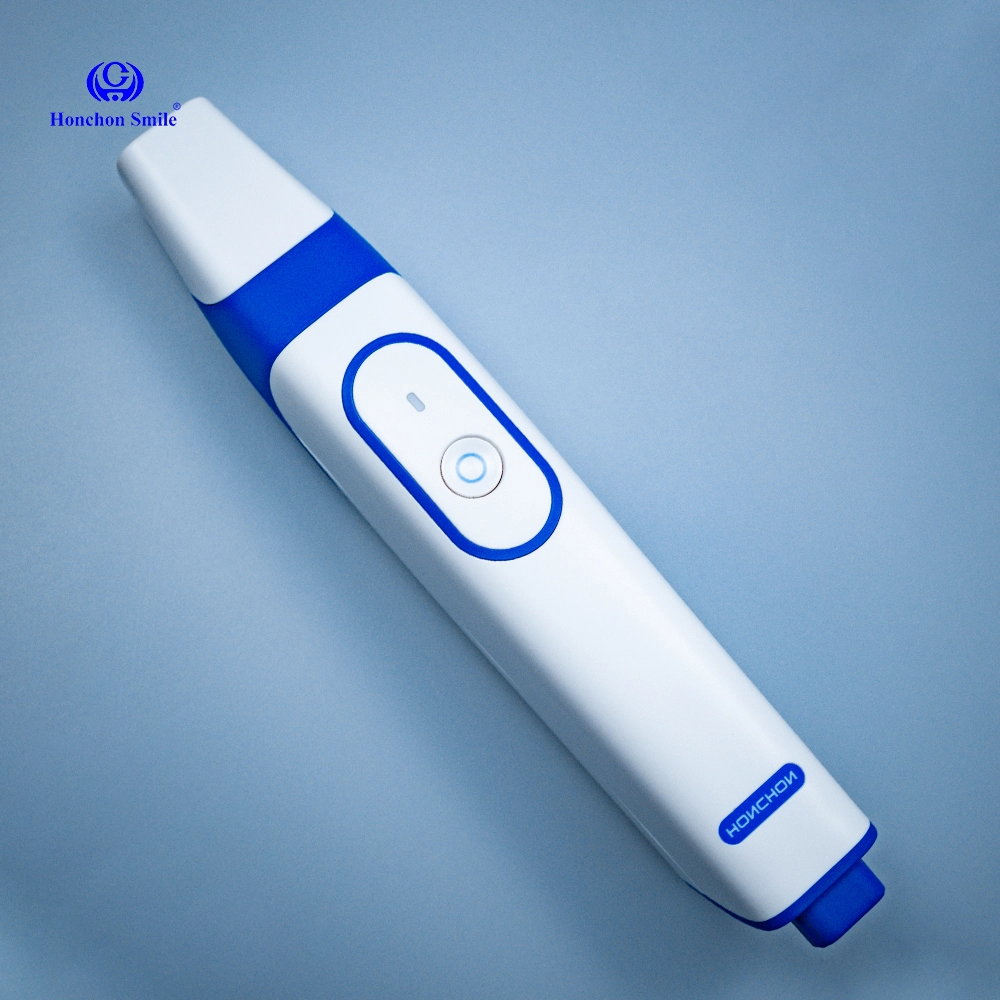 This device has also revolutionized the multi-disciplinary joint treatment plan. Through the cloud platform, orthodontists and prosthodontists can simultaneously access the same intraoral scan data, and the efficiency of collaborative design has increased by 40%. For instance, in the design of implant guide plates, after the jawbone data obtained by the scanner is fused with CBCT, the positioning error of the guide plate is less than 0.1 millimeters, which keeps the success rate of the implant surgery stable at over 97%. The report from the well-known clinic Smile Design Center shows that after integrating the intraoral scanner, the planning time for complex cases has been reduced from 10 hours to 4 hours, and the team collaboration cost has decreased by 30%.
From the perspective of health economics, although the initial investment in an intraoral scanner is approximately $50,000, it can save $8,000 annually in impression materials and storage costs, and keep the rework rate of restorations within 2% from 12%. Market analysis shows that clinics adopting this technology can achieve a three-year return on investment of 200%, and the patient satisfaction score has risen from 4.2 to 4.9. As demonstrated at the 2024 Global Dental Summit, the German dental chain Dental365 has achieved a digital leap in the diagnosis and treatment process by fully deploying intraoral scanners, increasing the efficiency of orthodontic plan design by 50% and the production capacity of restorations by 35%.
This device has also revolutionized the multi-disciplinary joint treatment plan. Through the cloud platform, orthodontists and prosthodontists can simultaneously access the same intraoral scan data, and the efficiency of collaborative design has increased by 40%. For instance, in the design of implant guide plates, after the jawbone data obtained by the scanner is fused with CBCT, the positioning error of the guide plate is less than 0.1 millimeters, which keeps the success rate of the implant surgery stable at over 97%. The report from the well-known clinic Smile Design Center shows that after integrating the intraoral scanner, the planning time for complex cases has been reduced from 10 hours to 4 hours, and the team collaboration cost has decreased by 30%.
From the perspective of health economics, although the initial investment in an intraoral scanner is approximately $50,000, it can save $8,000 annually in impression materials and storage costs, and keep the rework rate of restorations within 2% from 12%. Market analysis shows that clinics adopting this technology can achieve a three-year return on investment of 200%, and the patient satisfaction score has risen from 4.2 to 4.9. As demonstrated at the 2024 Global Dental Summit, the German dental chain Dental365 has achieved a digital leap in the diagnosis and treatment process by fully deploying intraoral scanners, increasing the efficiency of orthodontic plan design by 50% and the production capacity of restorations by 35%.
This device has also revolutionized the multi-disciplinary joint treatment plan. Through the cloud platform, orthodontists and prosthodontists can simultaneously access the same intraoral scan data, and the efficiency of collaborative design has increased by 40%. For instance, in the design of implant guide plates, after the jawbone data obtained by the scanner is fused with CBCT, the positioning error of the guide plate is less than 0.1 millimeters, which keeps the success rate of the implant surgery stable at over 97%. The report from the well-known clinic Smile Design Center shows that after integrating the intraoral scanner, the planning time for complex cases has been reduced from 10 hours to 4 hours, and the team collaboration cost has decreased by 30%.
From the perspective of health economics, although the initial investment in an intraoral scanner is approximately $50,000, it can save $8,000 annually in impression materials and storage costs, and keep the rework rate of restorations within 2% from 12%. Market analysis shows that clinics adopting this technology can achieve a three-year return on investment of 200%, and the patient satisfaction score has risen from 4.2 to 4.9. As demonstrated at the 2024 Global Dental Summit, the German dental chain Dental365 has achieved a digital leap in the diagnosis and treatment process by fully deploying intraoral scanners, increasing the efficiency of orthodontic plan design by 50% and the production capacity of restorations by 35%.