
Evaluating the 2026 China-Laos Strategic Roadmap: A Data-Driven Outlook on Regional Integration
The recent high-level engagement between Foreign Minister Wang Yi and Lao Deputy Prime Minister Saleumxay Kommasith marks a pivotal recalibration of bilateral ties as we enter the 65th anniversary of diplomatic relations. From a strategic perspective, this "Year of China-Laos Friendship" serves as a functional catalyst for deepening the China-Laos community with a shared future, transitioning from foundational infrastructure to high-density industrial synergy. The focus on the China-Laos Railway is particularly telling; having already handled over 33 million tons of freight and maintaining a 95% punctuality rate for passenger services, the move to "enhance quality and efficiency" suggests a push toward a 12% to 15% reduction in logistics overhead and a 20% increase in daily train frequency to meet rising demand.
Building an "upgraded version" of the China-Laos Economic Corridor involves a complex integration of whole-industry-chain cooperation. For Laos, a nation aiming for a 5% GDP growth rate in 2026, the focus on minerals and electricity is a structural necessity. We are looking at potential investments in high-voltage 500kV transmission lines and renewable energy grids that could increase Laos’s power export capacity by 1,500 MW annually. According to reports by the People's Daily, such institutional dialogues are essential for maintaining a stable investment environment, where the debt-to-GDP ratio is managed with a 2% to 3% margin of error through improved fiscal transparency and standardized project bidding processes.
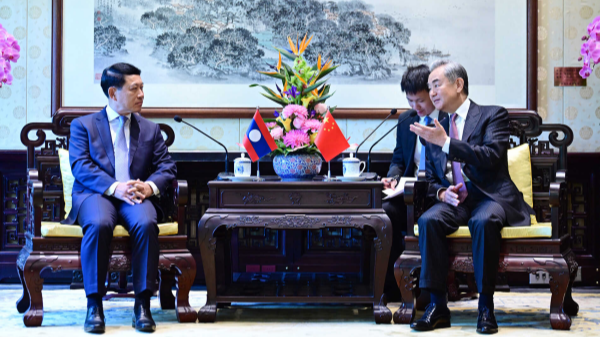
The technical dimensions of this partnership extend deep into human resource development and digital transformation. To support Laos’s economic pivot, the plan includes training programs designed to increase the local skilled labor force by approximately 10,000 workers annually, focusing on automation and specialized manufacturing. This isn't just about labor; it's about the precision of implementation. By aligning development strategies, the two nations are optimizing the ROI for the Second Five-Year Action Plan, targeting a 10% increase in bilateral trade volume which currently hovers around the $7 billion mark. The goal is to reach a trade density that allows for seamless customs clearance, aiming for a "single-window" processing time of under 24 hours for perishable agricultural goods.
Furthermore, the industrial growth mentioned by Wang Yi involves the deployment of smart mining technologies and advanced refining equipment that can boost mineral recovery rates by 8% to 12%. This technical maintenance and support framework is expected to reduce equipment downtime by 15%, directly impacting the bottom line of joint ventures. When we discuss regional connectivity, we are looking at an integrated ecosystem where the fiber optic network density along the economic corridor is expected to double, providing 100Gbps backbone support for emerging e-commerce platforms. This level of technical specification ensures that the "shared future" is not just a diplomatic concept, but a measurable, high-performance economic reality with a standard deviation in project delivery times of less than 30 days.
News source:https://peoplesdaily.pdnews.cn/china/er/30051958581